Contents
How Often Should A Fire Alarm Be Tested?
Fire alarm systems are a vital part of most business premises, as well as many residential properties. They can provide a vital warning that could save lives and reduce the damage caused by fires.
At Jack Jones Electrical, we offer fire alarm installation, testing and maintenance for homes and businesses across Swadlincote, Derby, Leicester, Tamworth, Nottingham and the surrounding area. As such, we understand fire safety rules and how to ensure full compliance and ensure your system is always ready for when you need it.
So, how often should a fire alarm be tested? The answer is: it depends. The testing frequency you need will depend on the type and size of your property, as well as the fire alarm system you use. To help you understand, we’ve put together this handy guide.
Why Are Fire Alarms Important?
Fire alarms are important because they can aid in fire detection and reduce the damage caused by fires. The sooner a fire is noticed, the quicker evacuation plans can be put in place and the fire brigade can be called to assist.
Having a fire alarm system installed can also ensure compliance with relevant safety standards and laws.
For privately-owned homes, there is no requirement to fit a fire alarm system. However, all new build homes in England and Wales must comply with Building Regulations. Specifically, in Approved Document B (Fire Safety), developers are required to fit mains-powered, interlinked smoke alarms on every storey and in circulation spaces such as hallways, as well as heat alarms in kitchens.
In rented homes, smoke alarms are a legal requirement, while HMOs must have a fire detection and alarm system installed.
Commercial premises must have a fire detection and alarm system under the Regulatory Reform (Fire Safety) Order 2005, along with appropriate fire fighting equipment.
There are several types of fire alarm systems, including:
- Conventional Fire Alarm Systems: Conventional fire alarm systems divide properties into zones, and use radial wiring to connect detectors and call points to connect each zone to the central control panel, which identifies the zone affected. When the fire alarm control panel receives a signal it will flash on the panel to tell you where the fire is situated. This system is a simple, easy to maintain option that’s ideal for many business premises.
- Addressable Fire Alarm Systems: Addressable systems create a unique address for all the call points, alarms and other system components, meaning that the central fire alarm control panel can quickly identify the source of the alarm. This solution is ideal for large properties and high-risk premises.
- Wireless Fire Alarm Systems: Wireless systems use battery-powered devices and radio signals to connect devices to the central system. These solutions are usually used for temporary structures or during construction projects before the main system is installed.
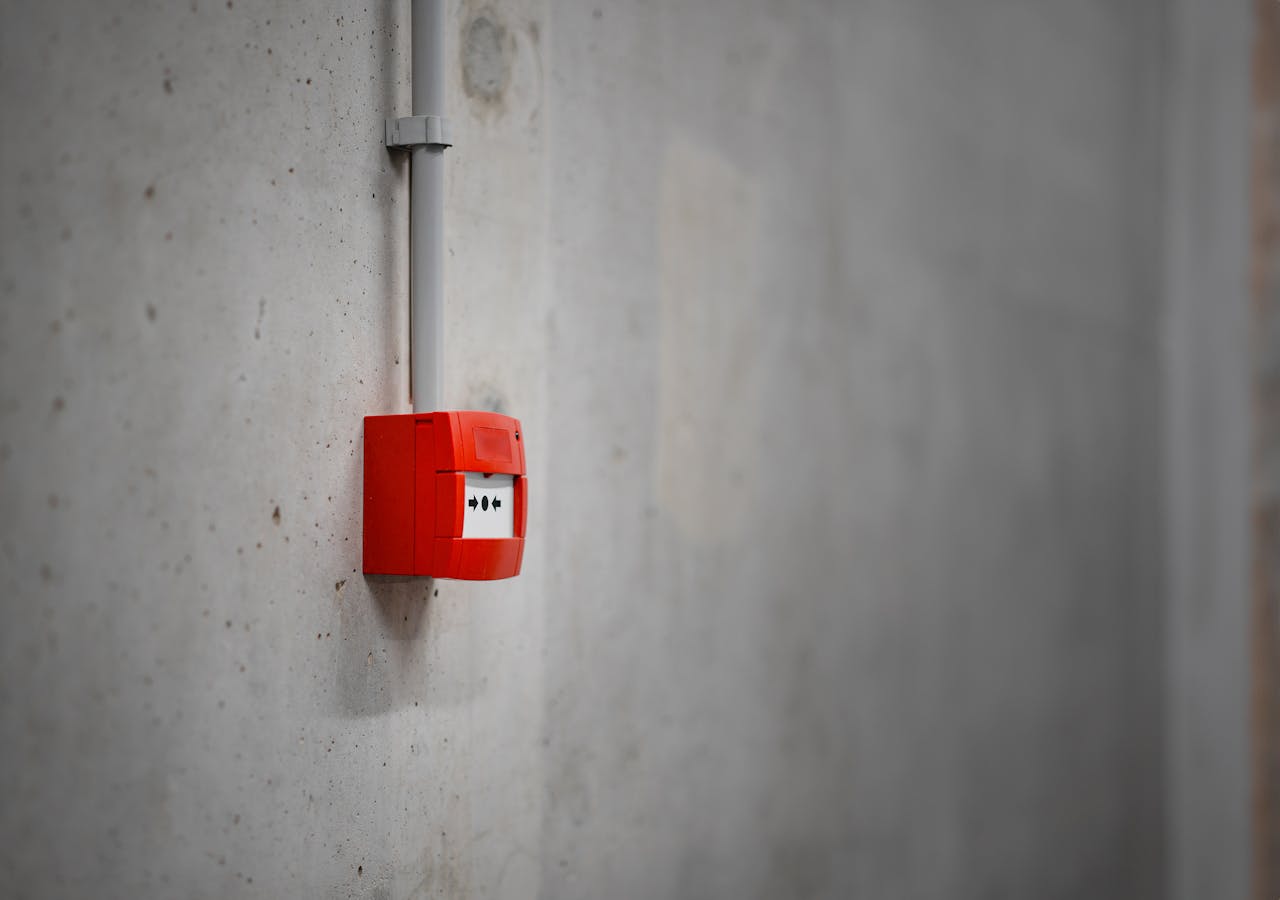
- Manual Systems: For low-risk or small commercial premises, or as part of a larger system, manual call points are used, meaning staff will identify the fire and alert others through the manual fire alarm call point.
The type you need depends on the size and use of your property, with each offering its benefits and downsides. If you work with an experienced electrician like Jack Jones Electrical to install your fire alarm system, our team can help you find the right solution to suit your unique needs.
How Often Should Fire Alarms Be Checked?
Testing frequencies for fire alarms vary depending on where they are being used and the level of risk. Some rough guidelines are below.
In Homes
Most residential homes don’t have a full fire alarm system, but smoke alarms and other safety devices should be tested at least once a month. Monthly testing usually involves pressing the test button to ensure the alarm will sound if required. Testing your smoke alarm monthly will ensure that you’re aware of any issues, such as breakages and low batteries.
In Rented Properties Or HMOs
Rental properties don’t legally require a fire alarm system, especially if they are just individually- occupied houses or flats. Houses of multiple occupancy (HMOs), legally need to have fire alarm systems under the Regulatory Reform (Fire Safety) Order 2005 and the Housing Act 2004. These alarms need to be well-maintained and tested weekly, with a visual inspection and test to the fire alarms. Emergency lighting needs to be checked monthly and a full fire alarm service needs to be carried out every 6 months.
In Commercial Premises
Commercial fire alarms need to be tested weekly under British Standard BS 5839. During the fire alarm test, a specific call point needs to be activated, with the results logged in the fire alarm testing log book. Every 6 months full fire alarm system servicing is required, which involves a more thorough inspection.
Who Should Carry Out Fire Alarm Testing?
Weekly fire alarm testing should be carried out by a responsible person, who understands the system. This might be the business owner or property manager.
For 6 monthly fire alarm inspections, the work must be carried out by a competent person. While this doesn’t necessarily have to be a fully-qualified electrician, it does have to be someone with the skills and training to inspect your fire alarm system.
This is usually a fire alarm technician, or it could be a qualified electrician like a member of the team at Jack Jones Electrical. Our fully qualified technicians have the skills and knowledge needed to ensure your system is functioning correctly and meets your needs and relevant safety standards.
How Often Should Fire Alarms Be Changed?
It is often recommended that smoke detectors and fire alarms are replaced every 10 years to ensure they are up to date and functioning correctly.
During your 6 month inspection, your electrician can discuss whether you need to upgrade your fire alarm system to meet the specific needs of your HMO or commercial premises.
Book Professional Fire Alarm Servicing
Whether you’re a homeowner, landlord or commercial property manager, fire safety is crucial. As such, you need to make sure that your fire alarm systems are regularly checked, and that any repairs or upgrades are carried out when required.
At Jack Jones Electrical, our team can carry out a range of tasks, including fire alarm installation, maintenance and servicing. We can also deal with most commercial and domestic installations, EICR testing, electrical inspection, lighting, fire alarms, CCTV, EV charger installation and more.
So, if you’re looking for a local Midland-based electrician to help ensure your property meets relevant safety standards and gives you the electrical output you need, contact us today on 07508706527 or by emailing jack@jackjoneselectrical.co.uk.